CONNECTING LEARNING TO CAREERS
A field guide for strengthening STEMM career pathway systems
Skip to: SOA’s 2026 Field Guide | Resources | Supporting Organizations
Adding 20 million new STEMM workers to the U.S. economy requires collaboration across many systems. Connecting Learning to Careers helps STEMM education, training, and workforce leaders better understand the systems that shape STEMM talent development and career pathways. Use the guide to:
1) Understand end-to-end learning to workforce systems and their attributes using our frame.
2) Get specific and local to understand how those systems are operating on the ground.
3) Turn local knowledge into shared opportunity and action with cross-system partners.
Whether you're in education, workforce development, business, or community leadership, this guide offers an approach to build the cross-system fluency needed realize stronger, more intentional STEMM pathways, from curiosity to career.
We invite you to download the guide and use the approach in your community. Join the STEMM Opportunity Alliance for access to technical assistance and additional resources.
Field Guide
Download the Complete Field Guide PDF
Download the Field Guide Graphics
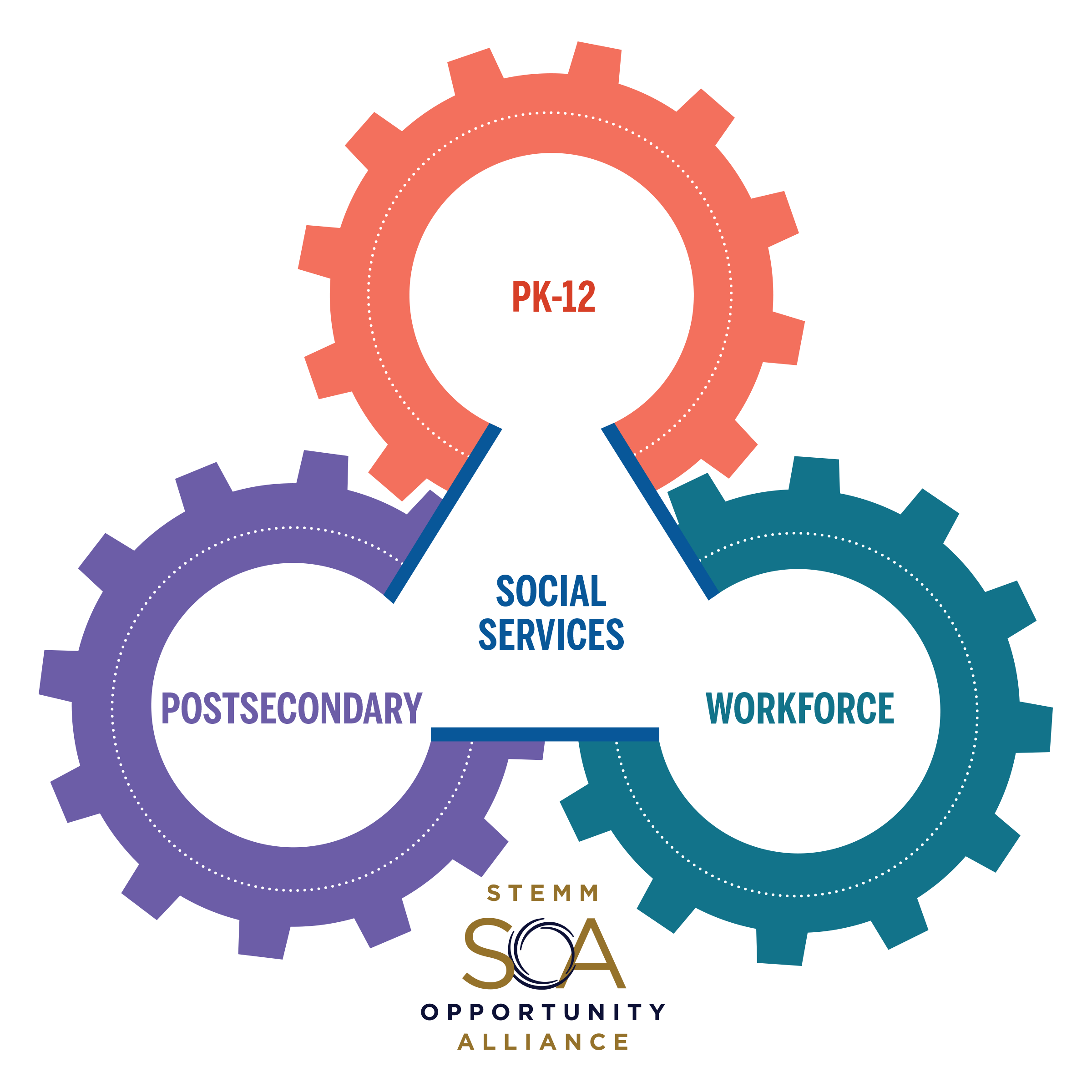
Essential Systems for STEMM Learning to Career Journeys
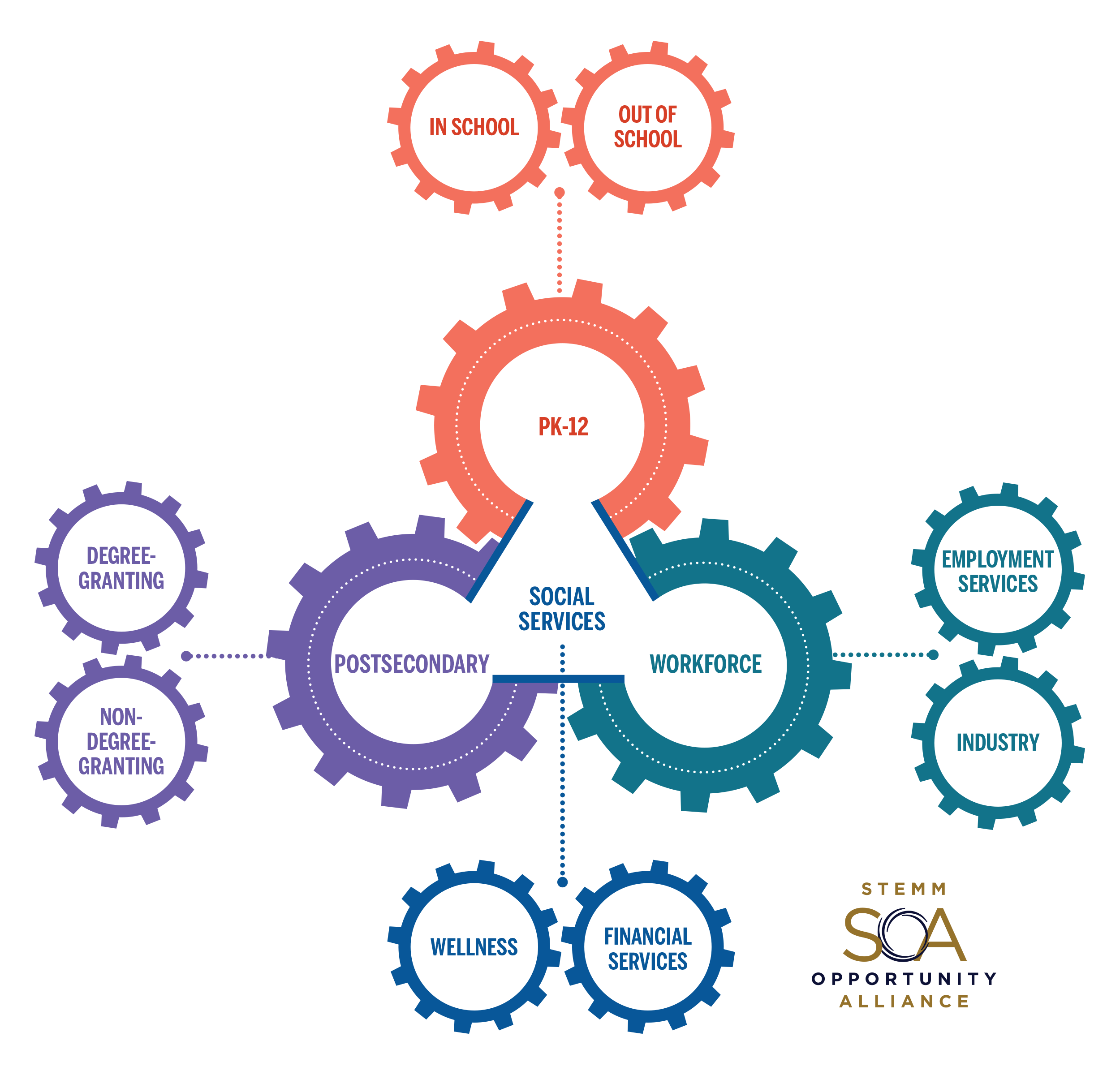
Components That Comprise Each System
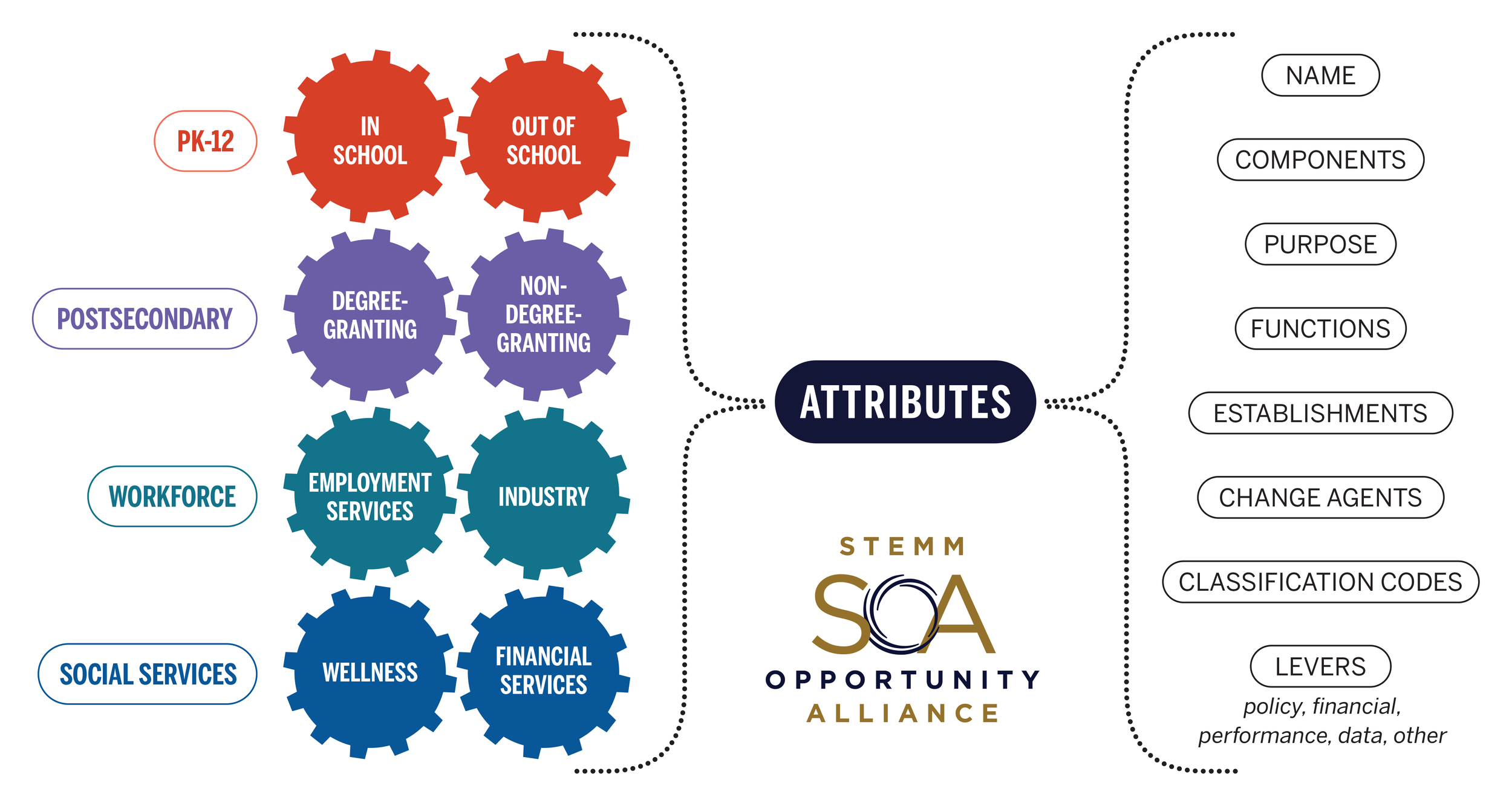
End-to-End Frame of Reference
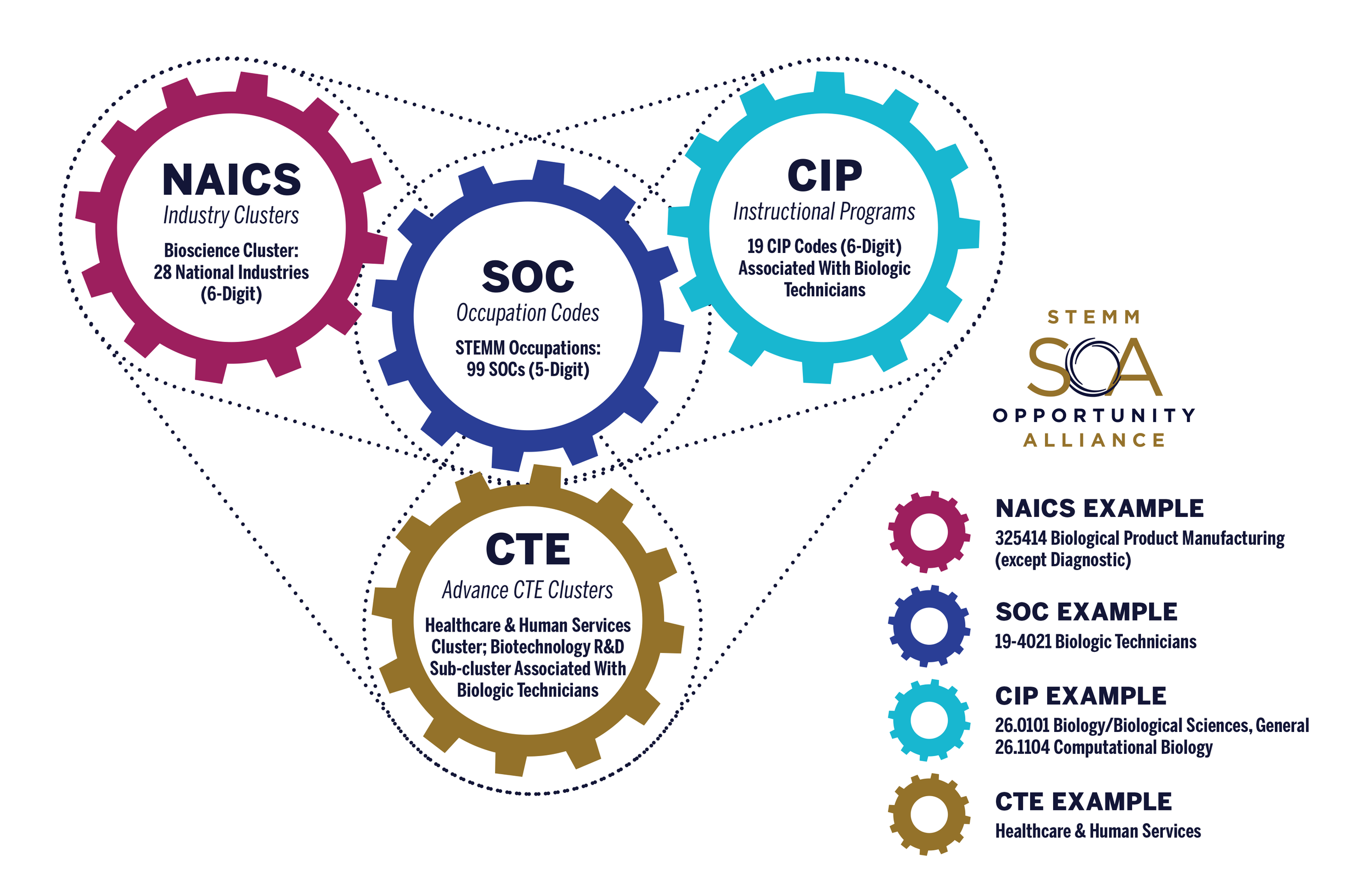
Classification Crosswalk
Resources
-
Arizona's schools, colleges, workforce boards, employers, and funders have developed criteria independently for identifying and measuring core workforce skills, each with distinct language, levers of control (e.g., strategic tools, policies, management practices), and definitions of success. This case study demonstrates how SOA Partner SciTech Institute and change agents across the state of Arizona are using an end-to-end systems understanding to build stronger cross-system alignment and impact for Arizona’s students.
Download the Arizona case study Speaking Across Languages
-
The PK-12, Postsecondary, and Workforce systems each use unique classification codes that undergird reporting and data assessments. These codes can provide insight into education and workforce pathways and help leaders understand occupations and skills. This resource shows how understanding systems classification attributes (NAICS, SOC, CIP, and CTE Career Clusters) can unearth useful information about STEMM learning and training pathways, occupations, and skills. When taken together, change agents can navigate four different vocabularies to create a more intentional paths for learners and jobseekers.
Supporting Organizations
The following organizations are supporters of Connecting Learning to Careers – a field guide for understanding, communicating and aligning across learning and workforce systems to build strong STEMM talent ecosystems. Organizational supporters endorse approaches to strengthen the STEMM learning to career journey through cross-system understanding and alignment.